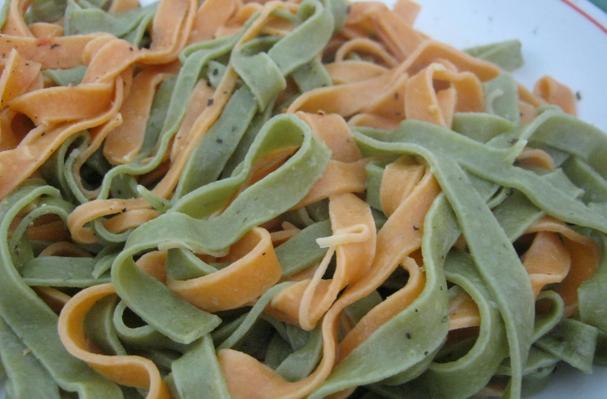
About This Food
Fettuccine is a ribbon type pasta popular in Italy. In Italian, the word fettuccine means little ribbons, because of its appearance.
Fettuccine is made from egg and flour. It is similar to Tagliatelle, except that tagliatelle is narrower.
Information
Translations: フェットチーネ, Tagliatelle, Fettuccini, 망해 버린, פטוצ 'יני, Феттуццине, Феттучіні, 意大利宽面条, Феттучини
Physical Description
Long, flat, thick, ribbon-like strands of pasta. Traditional fettuccine pasta have thick ribbons that can really hold up a lot of sauces like tomato sauce and cream sauce.
Colors: light yellow, light brown if whole-wheat
Tasting Notes
Flavors: mild, salty
Mouthfeel: Thick, Chewy
Food complements: Chicken, Alfredo sauce, Tomato, Seafood, Cheese, Brocoli
Wine complements: White wine, Sauvignon blanc
Beverage complements: Lemonade, Iced tea
Substitutes: Linguine, Spaghetti, Tagliatelle, Spaghettini
Selecting and Buying
Seasonality: january, february, march, april, may, june, july, august, september, opctober, november, december
Choosing: Choose good quality pasta based on the appearance and product labeling. Select pasta made with durum semolina, and made from bronze dies or plates. Pasta made from bronze dies or bronze plates are more porous which helps absorb more sauce
Buying: Fettuccine pasta is available fresh and dried in most stores or supermarkets. You can also make one at home using a rolling pin and a pasta dough recipe.
Procuring: not applicable
Preparation and Use
Boil in a large pot, a gallon of water. When the water is boiling, add salt and drop the pasta into the pot and let simmer until aldente, about 10-15 minutes for dried pasta, and 5 minutes for fresh. One popular recipe using Fettuccine pasta is Fettuccine Alfredo. The dish was named after the restaurateur Alfredo di Lelio. It was originally just pasta tossed with cheese and butter or cream.
Cleaning: not applicable
Conserving and Storing
As with most pasta, store fettuccine pasta in an airtight container in a cool dry place.